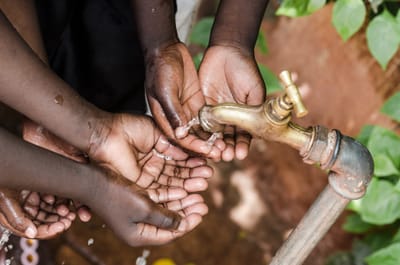
Operations Project for Liberia
Indigenous communities often possess deep knowledge of their local ecosystems, including relationships and interdependencies between species, that are critical for the well-being of the environment. They learned to work in harmony with their environment, preserving fragile ecosystems. We aim to incorporate local knowledge in economic and conservation efforts, empowering locals to be stewards of their own natural resources.
In 1998, the organization expanded its efforts to Monrovia, Liberia, delivering a consignment of relief materials estimated at $0.7 million USD. OPL left Liberia at the start of the second civil war and ceased operations when the civil war ended.
More than two decades after the end of Liberia’s civil war, humanitarian needs remain profound. Persistent food insecurity, the accelerating impacts of climate change, and fragile, overburdened infrastructure continue to challenge community resilience and long-term recovery.
In response, OPL renewed its commitment to Liberia with a forward-looking focus on sustainable development. In October 2022, the organization formally incorporated in Liberia, marking a new chapter grounded in locally driven solutions that strengthen livelihoods, build climate resilience, and promote lasting economic and social stability, adapting the slogan, “you will not miss us”. See the Our Approach section of the How We Work page on how we plan to implement this strategy.
A Liberia with sustainable, climate-resilient food systems and inclusive economic growth driven by responsible resource stewardship and local leadership.
Mission
We empower communities in Liberia through locally driven solutions that enhance economic resilience, promote responsible resource management, and build climate-adaptive livelihoods to reduce hunger and poverty.
Leadership Team
A successful project must not only deliver meaningful benefits to the community but also be self-sustaining and maintainable long after OPL’s direct involvement ends. This principle is embedded in OPL’s feasibility assessments and fully integrated into project design and cost planning.
Our Approach
OPL works in close partnership with local communities to design and implement projects, intentionally incorporating local knowledge, skills, and leadership. Whenever possible, local experts lead project implementation, with OPL serving in a supporting role.
When specific technical expertise is not initially available within the community, OPL temporarily assumes a leadership role while building local capacity. As skills and confidence grow, leadership is intentionally transferred to community members. Throughout implementation, OPL gradually reduces its direct involvement and ultimately exits the project once the community is fully equipped to sustain it independently.
This approach ensures long-term project viability driven entirely by local participation. While it limits the number of projects OPL can undertake at any one time, we believe that prioritizing quality, ownership, and longevity delivers the greatest and most lasting benefit to the communities we serve.
photo courtesy of https://www.facebook.com/p/Explore-Liberia-1-100087891440237/
Our Focus
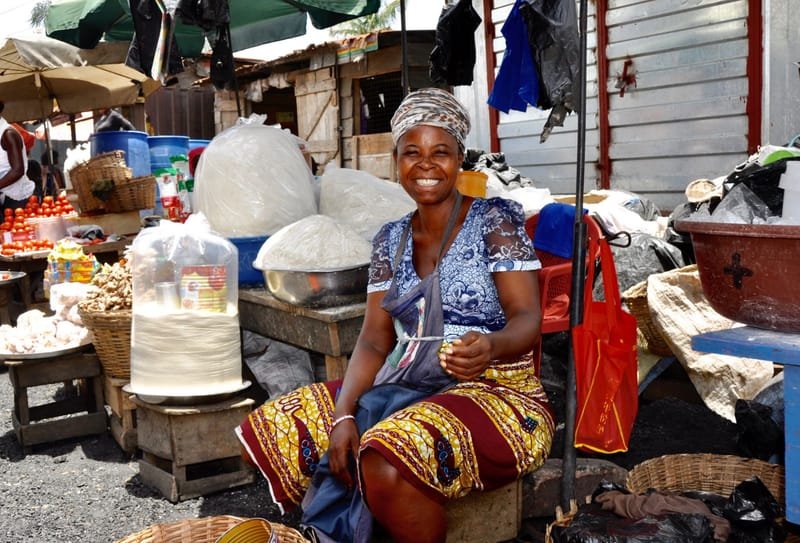
Economic Development
We support economic development by helping smallholder farmers and local businesses scale their operations and adopt climate-adaptive solutions. Our work focuses on strategies that promote sustainable growth through the efficient use of existing resources. We also provide guidance on accessing government and NGO resources to strengthen and expand their operations.
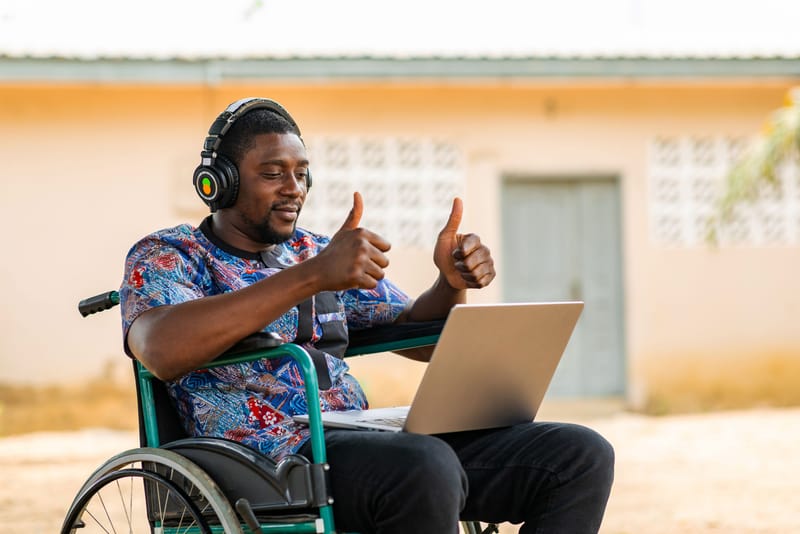
EDUCATION
In Liberia, countless students strive to learn with outdated materials and limited resources, while the world around them moves forward. Many schools and universities lack computers, research tools, and even basic textbooks. We believe every child and young adult deserves the chance to reach their full potential. By supporting schools and helping them secure the resources they need, we’re empowering a generation to learn, grow, and shape the future of Liberia.
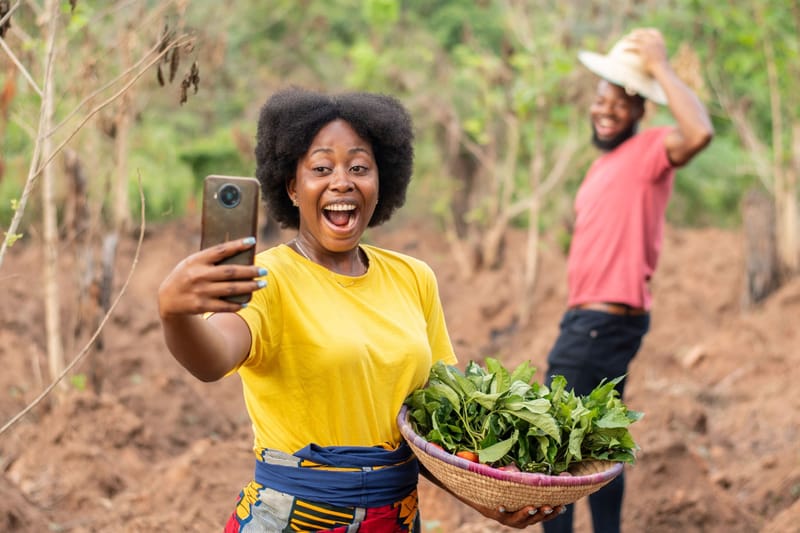
Gender Equality
Women and girls were disproportionately affected by Liberia’s civil war, and gender inequality remains a significant challenge today, especially as support from international aid organizations has declined. Advancing gender equality benefits not just women, but all of society—enabling everyone to participate fully, work safely, and contribute to the nation’s growth. We believe that partnering with community leaders, local businesses, and the Liberian government, we can create opportunities and foster an environment where all individuals can thrive.
Projects
Black Soldier Fly (BSF) Farming (In Progress)
Liberia faces a critical animal feed crisis that undermines food security, rural livelihoods, and access to affordable protein. Livestock, poultry, and aquaculture producers rely heavily on imported feed ingredients—primarily maize and soy—that are expensive, unreliable, and highly vulnerable to global price volatility and domestic logistical constraints. As feed costs rise, farmers reduce production or exit the sector entirely, resulting in lower availability and higher prices of eggs, poultry, fish, and meat for Liberian households. OPL is implementing a first-of-its-kind, scalable solution for Liberia: the establishment of a (BSF)–based circular animal feed system that converts organic waste into high-quality, locally produced protein feed. By integrating BSF farming, waste collection, digital ordering technology, and an advanced logistics network, the project will significantly reduce feed costs, improve supply reliability, address Liberia’s waste management crisis, and create inclusive employment opportunities—particularly for youth and women. Our CEO has completed his BSF certification in Ghana and returned with BSF larvae and other supplies to begin immediate implementation. We are seeking funding to expand and scale this operation to support most of Liberia’s animal feed needs, waste management effort, create employment, and solve supply chain issues in the country.
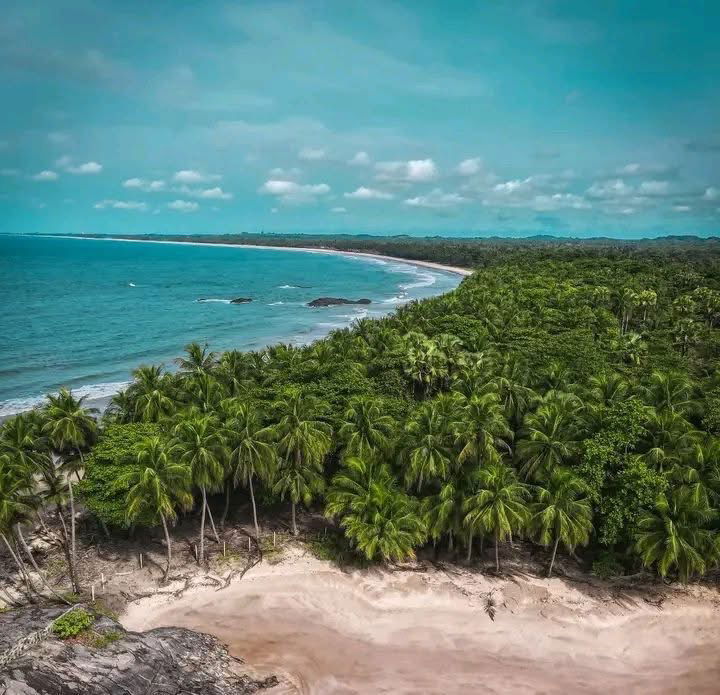
Marine Resource Education & Community-Based Eco-tourism (seeking funding)
A study by the Environmental Science and Policy in collaboration with researchers from the Wildlife Conservation Society (WCS) ranked Liberia and Indonesia coral reef fisheries most vulnerable to collapse based on indicators for their coral reef management, fisheries and food securities. This destruction not only threatens marine biodiversity but also undermines traditional livelihoods, exacerbating poverty and climate vulnerability. OPL is seeking funding for a significant cross-border coalition between the local community, Tubman University together with its West African affiliates, and other NGOs to establish a Marine Conservation Education & Sustainable eco-tourism project. The initiative aims to protect the critical marine biodiversity in the region, especially the fragile reefs which are being decimated by dynamite fishing, while promoting sustainable economic growth and poverty alleviation. The project also addresses environmental degradation of the only known reefs in Liberia by creating a Marine Protected Area (MPA). This project aligns with Liberia's national development strategy and international priorities related to sustainable growth. The project aims to serve as a model for sustainable conservation education program and sustainable tourism in the region. A feasibility study was completed in 2025 by the US-based EcoAssets. Fishtown photo courtesy of https://www.facebook.com/p/Explore-Liberia-1-100087891440237/
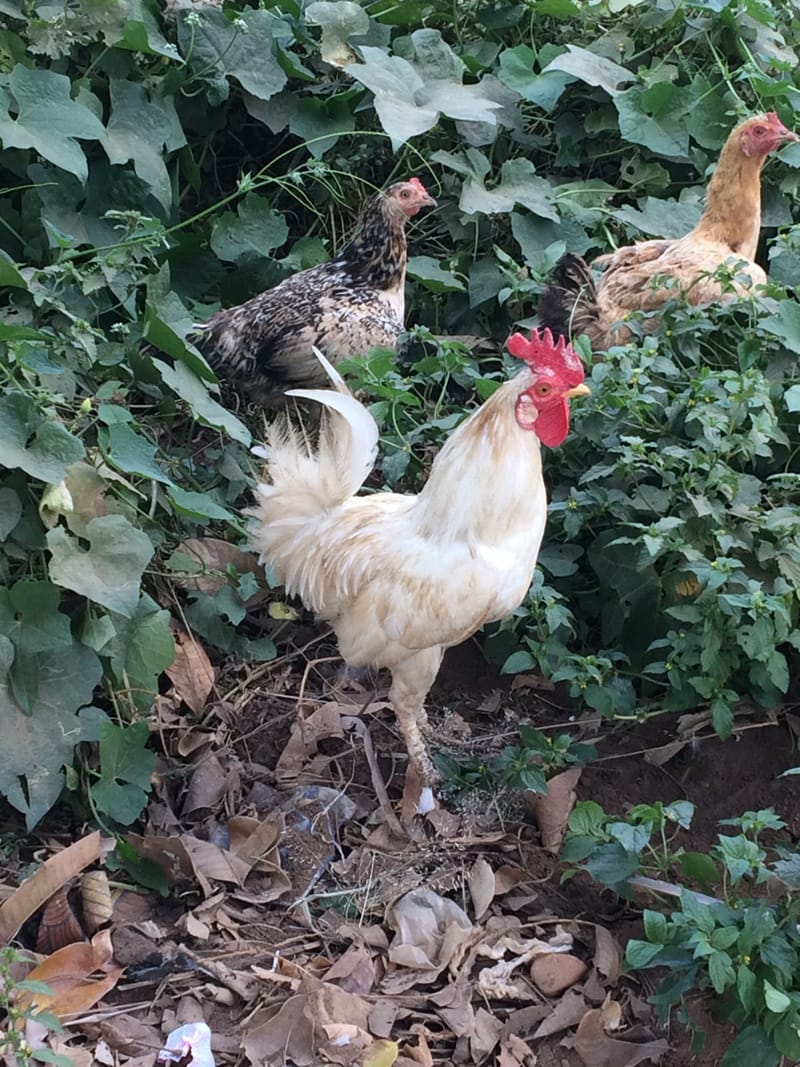
Poultry Farming (partially funded)
OPL is implementing a sustainable poultry farming initiative with the Grebo community to provide an alternative source of protein and income while reducing pressure on the only known coral reef ecosystems in Liberia. By strengthening local livelihoods and food security, the project aims to decrease reliance on artisanal fishing practices—including the use of dynamite and other destructive methods—that are rapidly degrading these critical marine habitats. Implementation is scheduled to commence in 2026, with a focus on delivering measurable conservation, nutrition, and economic benefits.
News & Articles
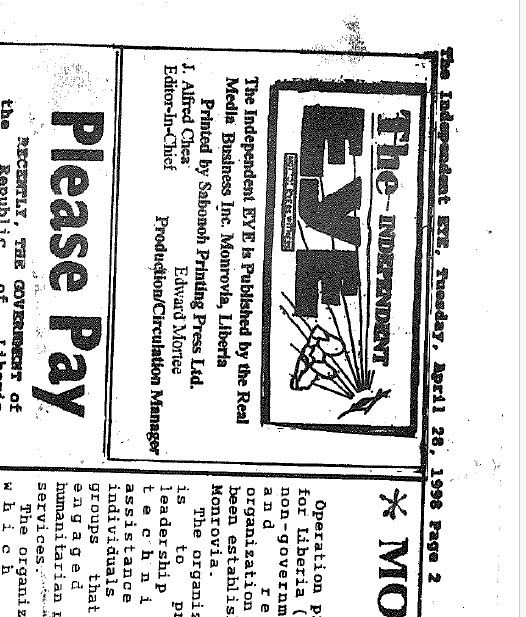
Operation Project for Liberia (OPL) a non-governmental and relief organization has been established in Monrovia.
Read More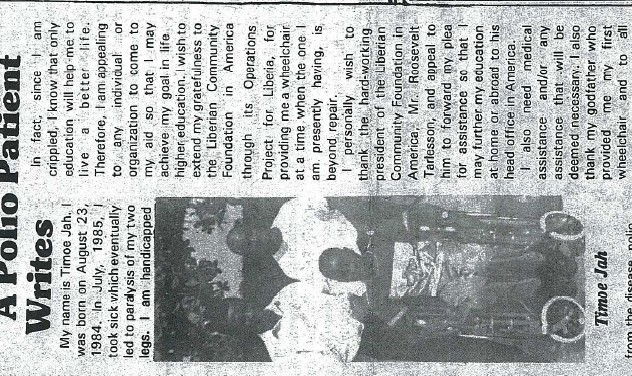
Timoe Jah expresses gratitude to OPL and partners.
Read More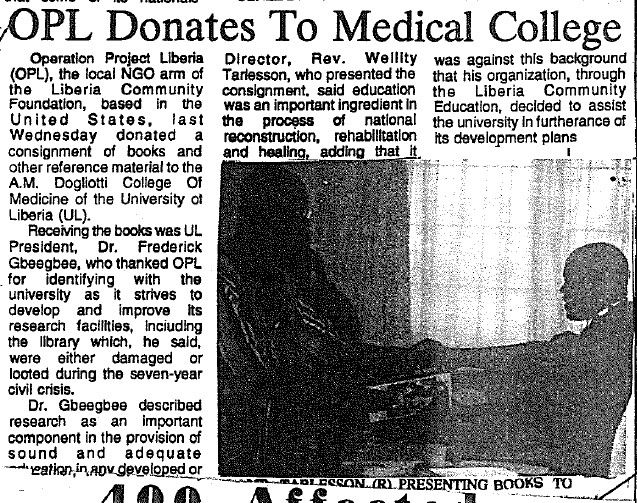
Operation Project for Liberia (OPL), the local NGO arm of the Liberia Community Foundation, based in the United States, last Wednesday donated a consignment of books and other reference material to the A.M. Dogliotti College of Medicine of the University of Liberia (UL).
Read More
Highlight of Liberia's main road on the hit documentary series Deadliest Journeys
Read More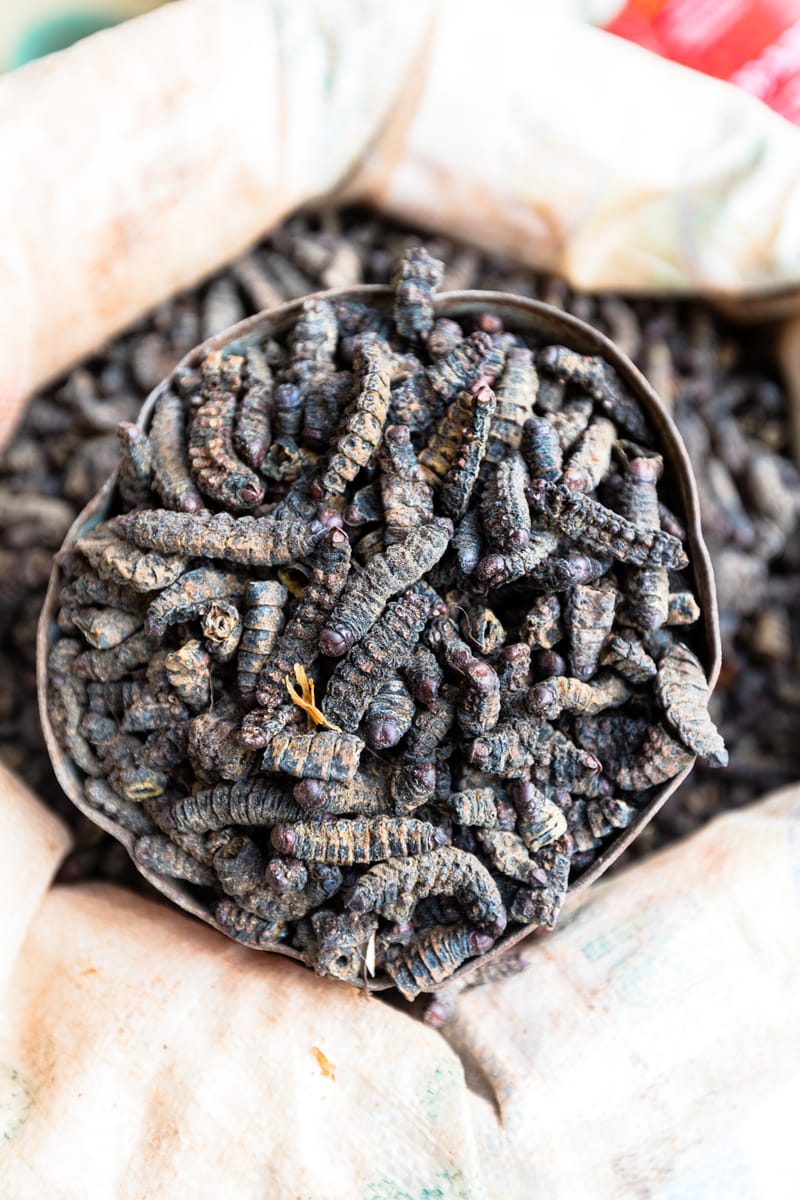
Black soldier flies transform organic waste into high-protein animal feed, reducing pollution and lowering feed costs. They are 100% organic and do not transmit diseases, making them a safe and sustainable solution that supports food security, creates green jobs, and reduces reliance on expensive imported feed ingredients.
Read MoreContact
- Monrovia, Liberia
Donate
Make an Impact
Poor infrastructure and impassable roads have left southeastern Liberia largely without aid. Many organizations cannot reach these communities, and government support is often delayed or absent.
OPL is taking action now by establishing a permanent presence in the region to align with our mission. To launch this effort, we are preparing to ship a container from the eastern United States to Liberia with essential supplies.
We welcome donations of gently used materials, including office furniture, clothing, paint, school supplies, and other useful items that might otherwise be discarded.
Please contact us to learn more about our current needs and upcoming shipment schedule.